
Blog
aquaponictec.com
What is Aquaponics?
Aquaponics is an innovative and sustainable agricultural system that integrates aquaculture (raising fish) with hydroponics (growing plants without soil) in a symbiotic environment. Here's a structured breakdown of its components and functions:
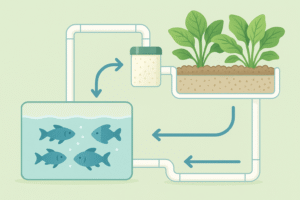
Key Components of an Aquaponics System
- Fish Tank — Houses fish; their waste initiates the nutrient cycle.
- Grow Beds — Hold plants and a growing medium (e.g., clay pebbles) for root support.
- Nitrifying Bacteria — Convert toxic ammonia → nitrites → nitrates, which plants absorb.
- Water Circulation System — Pumps water between tank and beds, forming a closed-loop cycle.
- Optional Aeration & Monitoring — Air stones, sensors, or IoT devices to boost oxygen and track pH.
How Does Aquaponics Work?
- Fish Waste Production: Fish excrete ammonia-rich waste into the water.
- Bacterial Conversion: Beneficial bacteria transform ammonia into plant-friendly nitrates.
- Plant Filtration: Plants absorb the nitrates, cleaning the water.
- Water Recirculation: Purified water returns to the fish tank, completing the cycle.
Top Benefits of Aquaponics
- Resource Efficiency: Uses up to 90 % less water than traditional soil farming.
- Chemical-Free Produce: Eliminates synthetic fertilizers by leveraging natural nutrient cycles.
- Versatility & Scalability: Works in poor-soil regions—from balcony setups to commercial greenhouses.
- Sustainability: Minimizes environmental impact with near-zero waste output.
Common Fish & Plant Species
Fish: Tilapia (hardy, fast-growing), catfish, trout, or ornamental species like goldfish.
Plants: Leafy greens (lettuce, kale), herbs (basil, mint), and fruiting crops (tomatoes, cucumbers).
Key Challenges & Best Practices
- Maintaining Balance: Monitor pH, ammonia, nitrites, nitrates regularly.
- System Interdependency: Fish, plants, and bacteria must coexist harmoniously.
- Initial Investment & Know-How: Requires upfront equipment costs and ecological understanding.
Real-World Applications
- Scalable Farming: From urban home systems to large commercial operations.
- STEM & Entrepreneurship: Popular in schools for hands-on science and with startups producing premium fish & greens.
Aquaponics embodies a closed-loop ecosystem—leveraging natural processes for efficient, healthy food production.
Contact us to learn how you can implement a custom aquaponics solution today.
 English (UK)
  العربية