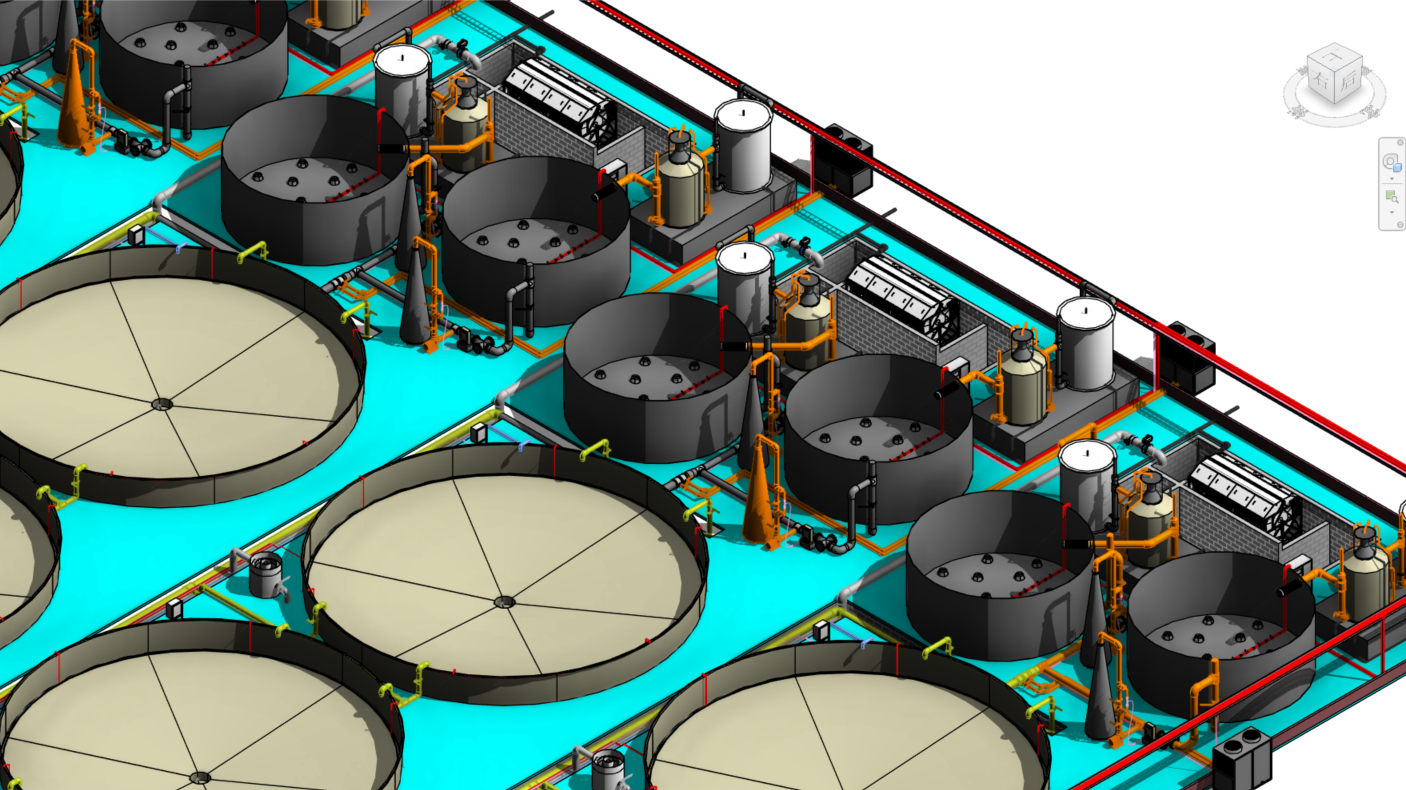
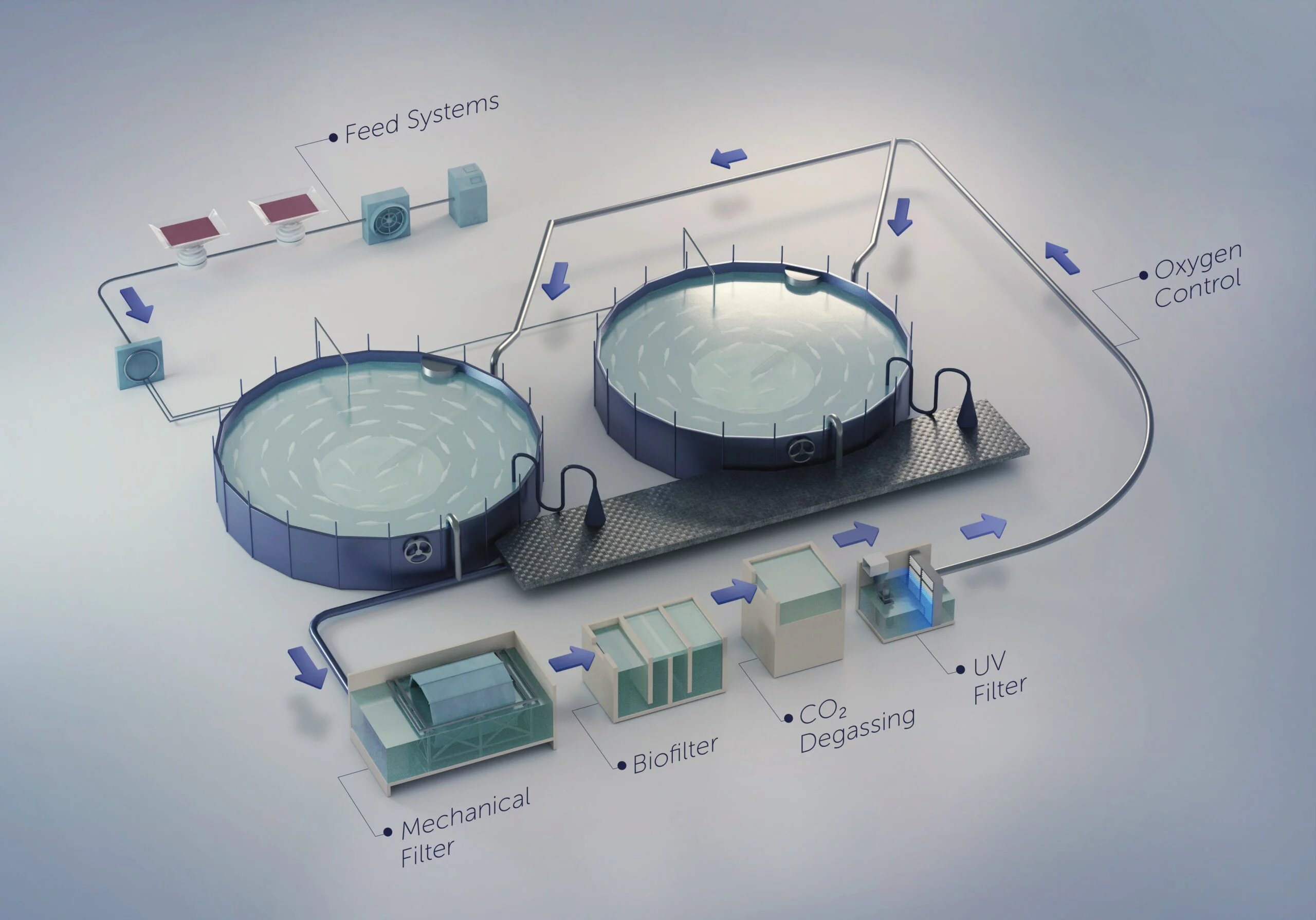
RAS (Recirculating Aquaculture System) is a fish farming system that reuses and treats water continuously through mechanical and biological filtration. It allows high-density fish production with minimal water use.
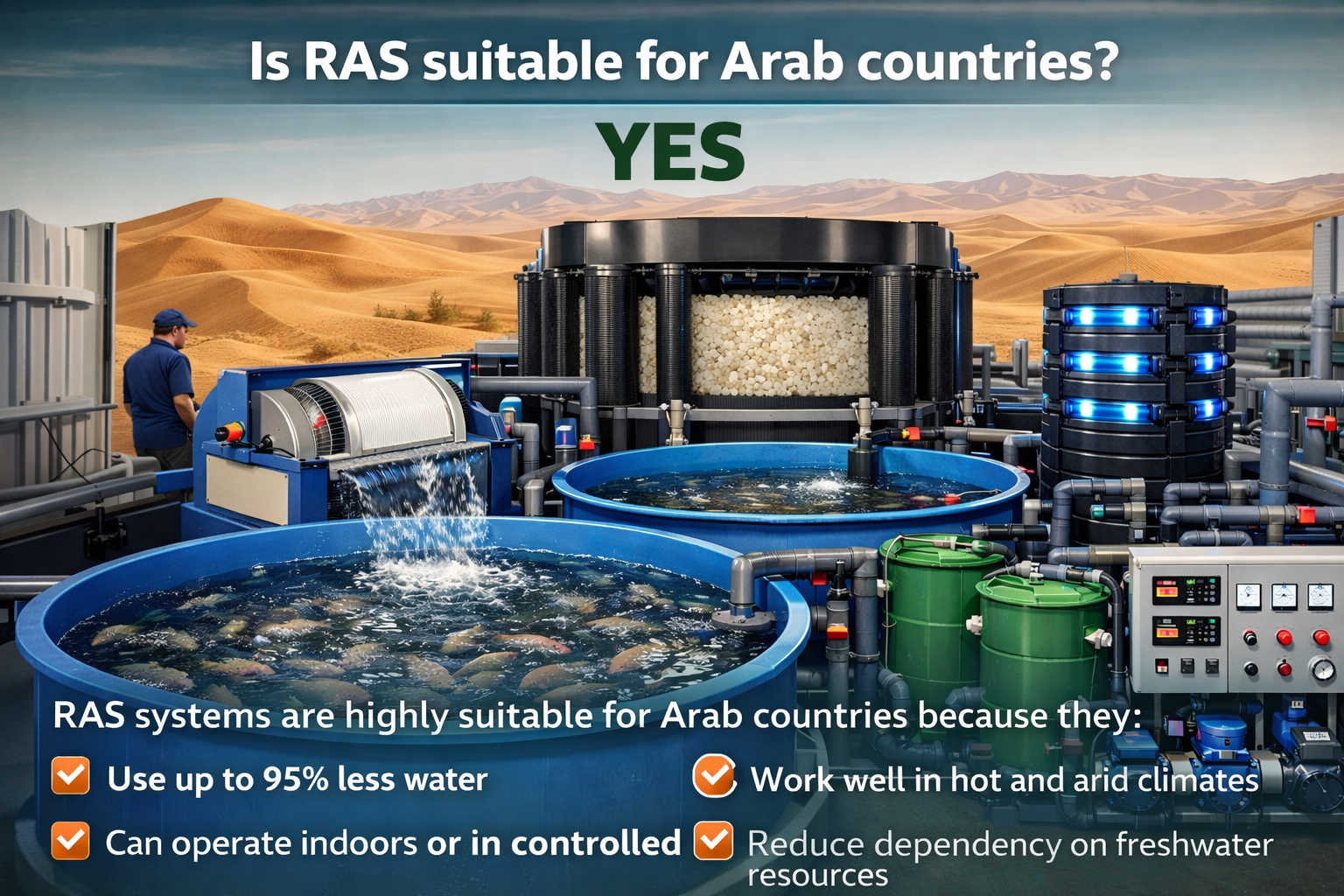
Is RAS suitable for Arab countries?
Yes. RAS systems are highly suitable for Arab countries because they:
Use up to 95% less water
Work well in hot and arid climates
Can operate indoors or in controlled environments
Reduce dependency on freshwater resources
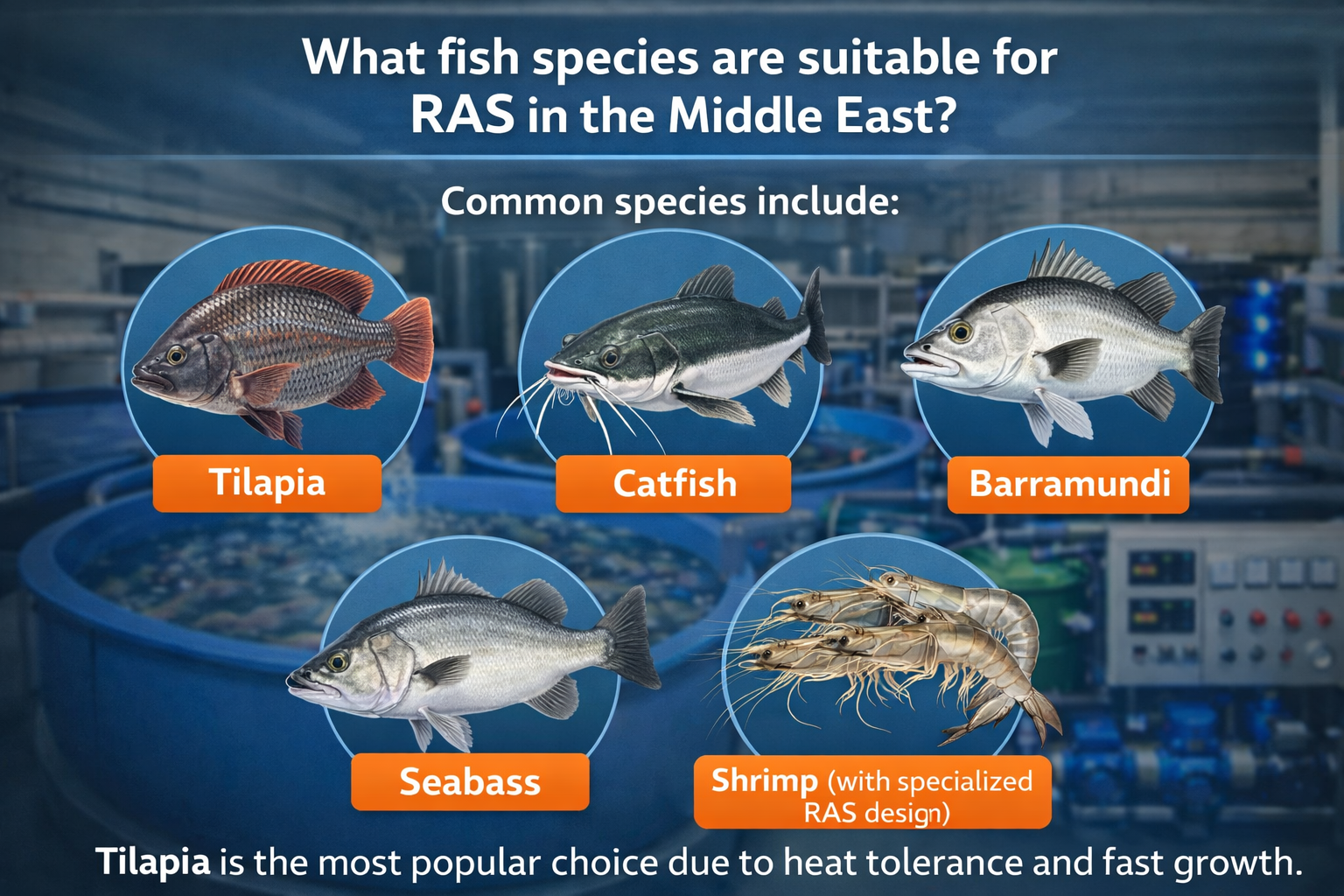
What fish species are suitable for RAS in the Middle East?
Common species include:
Tilapia
Catfish
Barramundi
Seabass
Shrimp (with specialized RAS design)
Tilapia is the most popular choice due to heat tolerance and fast growth.
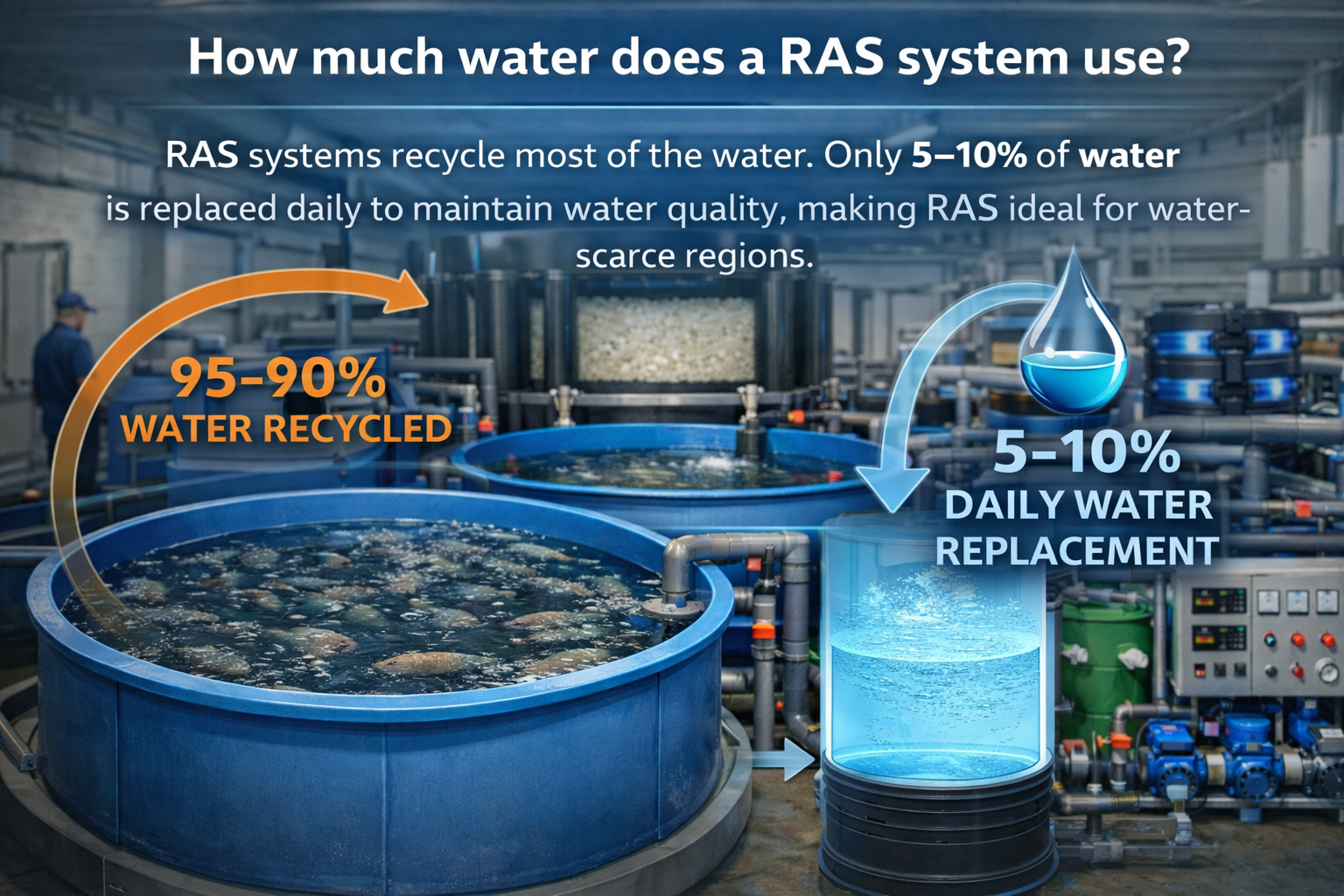
How much water does a RAS system use?
RAS systems recycle most of the water. Only 5–10% of water is replaced daily to maintain water quality, making RAS ideal for water-scarce regions.
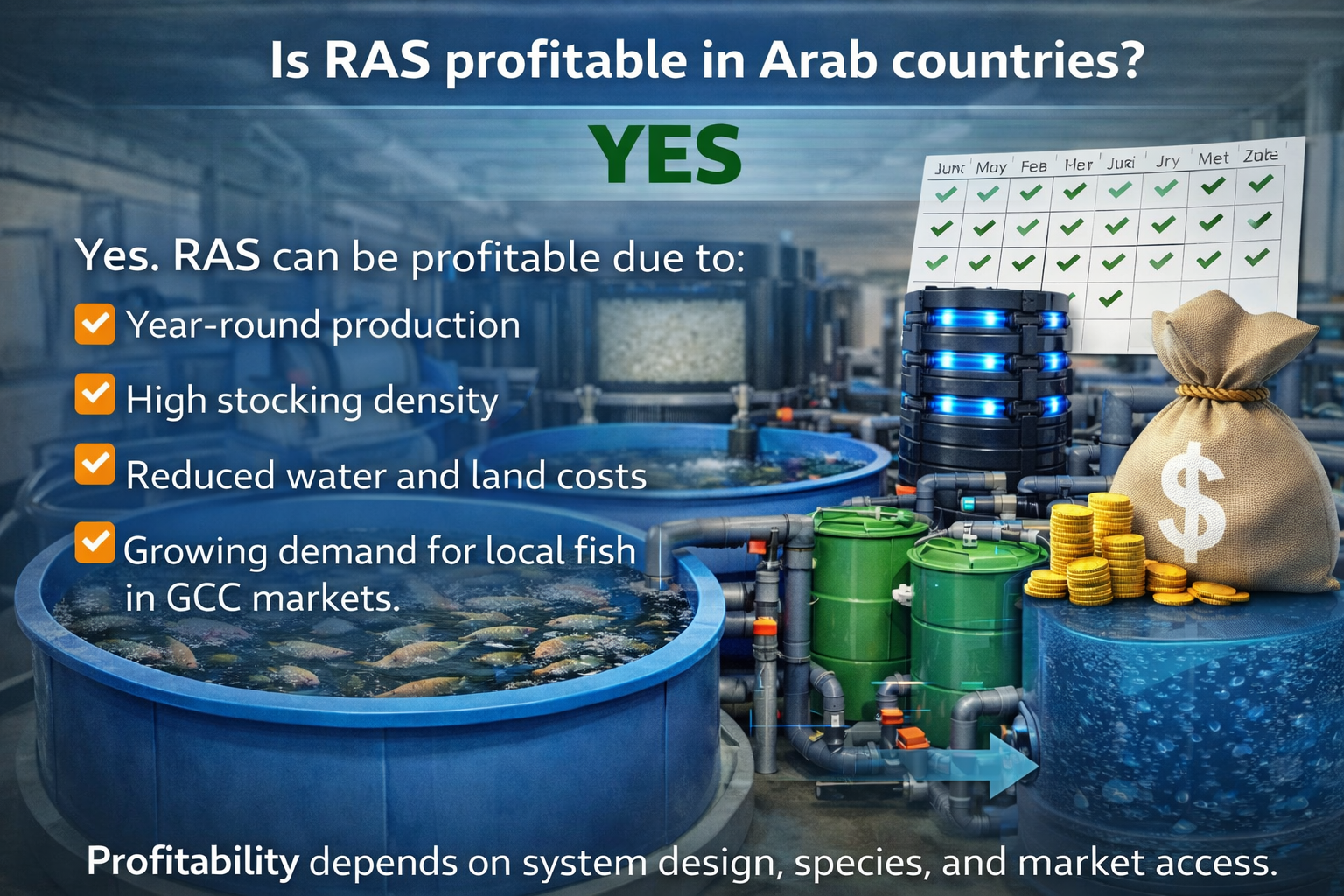
Is RAS profitable in Arab countries?
Yes. RAS can be profitable due to:
Year-round production
High stocking density
Reduced water and land costs
Growing demand for local fish in GCC markets
Profitability depends on system design, species, and market access.
Can RAS systems work in hot climates?
Yes. RAS systems can be designed with:
Insulated tanks
Cooling systems
Shading and ventilation
Temperature control units
This allows stable fish growth even in extreme summer temperatures.
How much space is required for a RAS system?
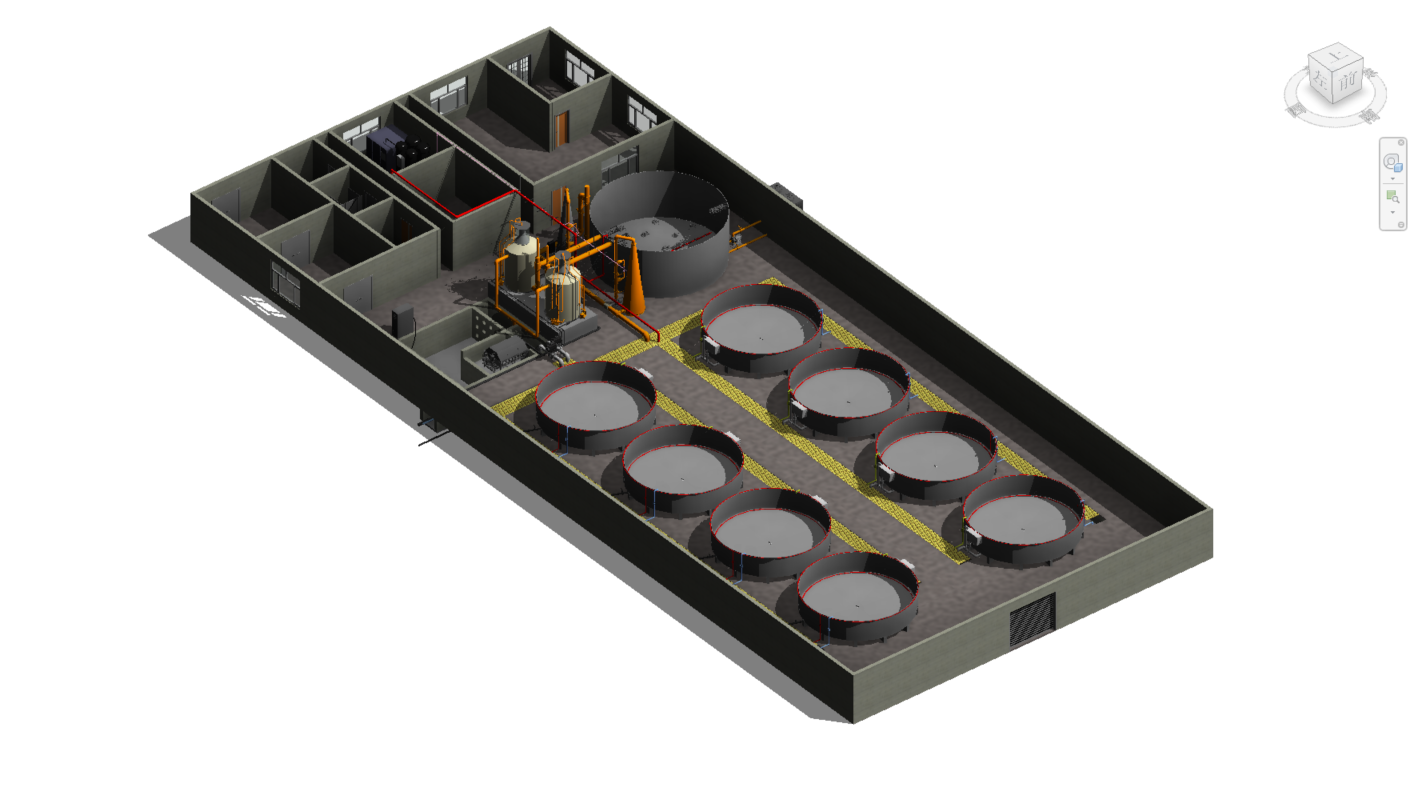
RAS systems are space-efficient and can be installed in:
Warehouses
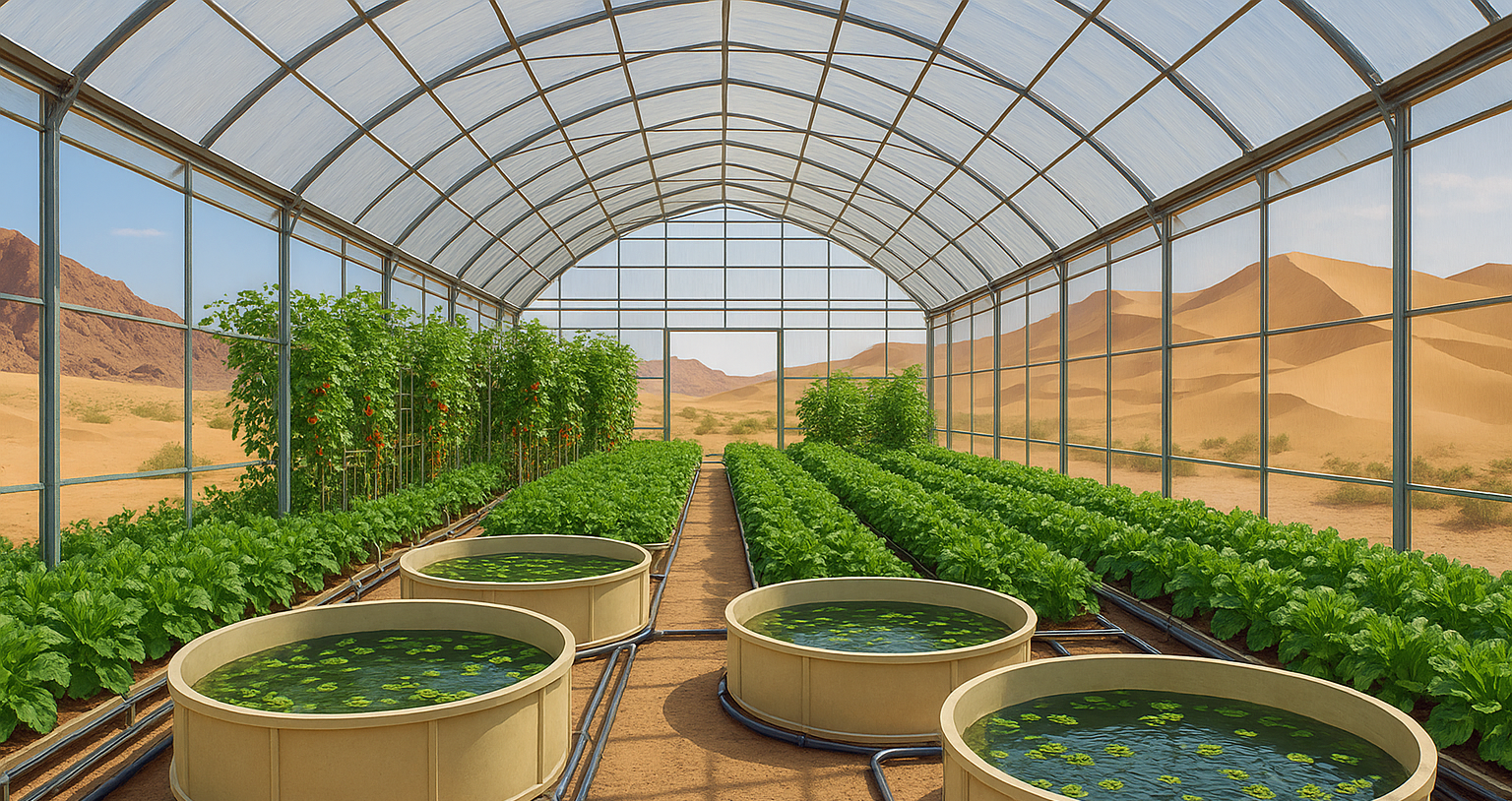
Greenhouses
Industrial buildings
Small commercial spaces
They are ideal for urban and semi-urban areas.
How much does a RAS system cost?
RAS system cost depends on:
Production capacity
Fish species
Level of automation
Filtration and oxygen systems
Small systems cost less, while commercial RAS farms require higher investment. Request a customized RAS system quote based on your needs.
Does RAS require electricity?
Yes. RAS systems require electricity for:
Water pumps
Aeration
Filtration
Monitoring systems
Solar and hybrid energy solutions can be used in sunny regions.
What maintenance is required for RAS systems?
Routine maintenance includes:
Checking water quality
Cleaning filters
Monitoring fish health
Inspecting pumps and aerators
Properly designed RAS systems are easy to manage.
Do you provide customized RAS system design?
Yes. RAS systems can be custom-designed based on climate, species, production targets, and budget.

 العربية
  English (UK)